
Multi-car accidents are some of the most confusing crashes on the road. In a matter of seconds, one collision can trigger another, and then another, leaving several vehicles damaged and multiple people injured. When that happens, one of the biggest questions becomes: Who is actually responsible?
At Reid Law Group, we know how overwhelming these situations can feel. When several drivers, several insurance companies, and several versions of events are involved, determining liability is rarely simple. The good news is that fault in a chain reaction crash is not based on guesswork. It is based on evidence, investigation, and a careful look at how the accident happened.
What Is a Chain Reaction Crash?
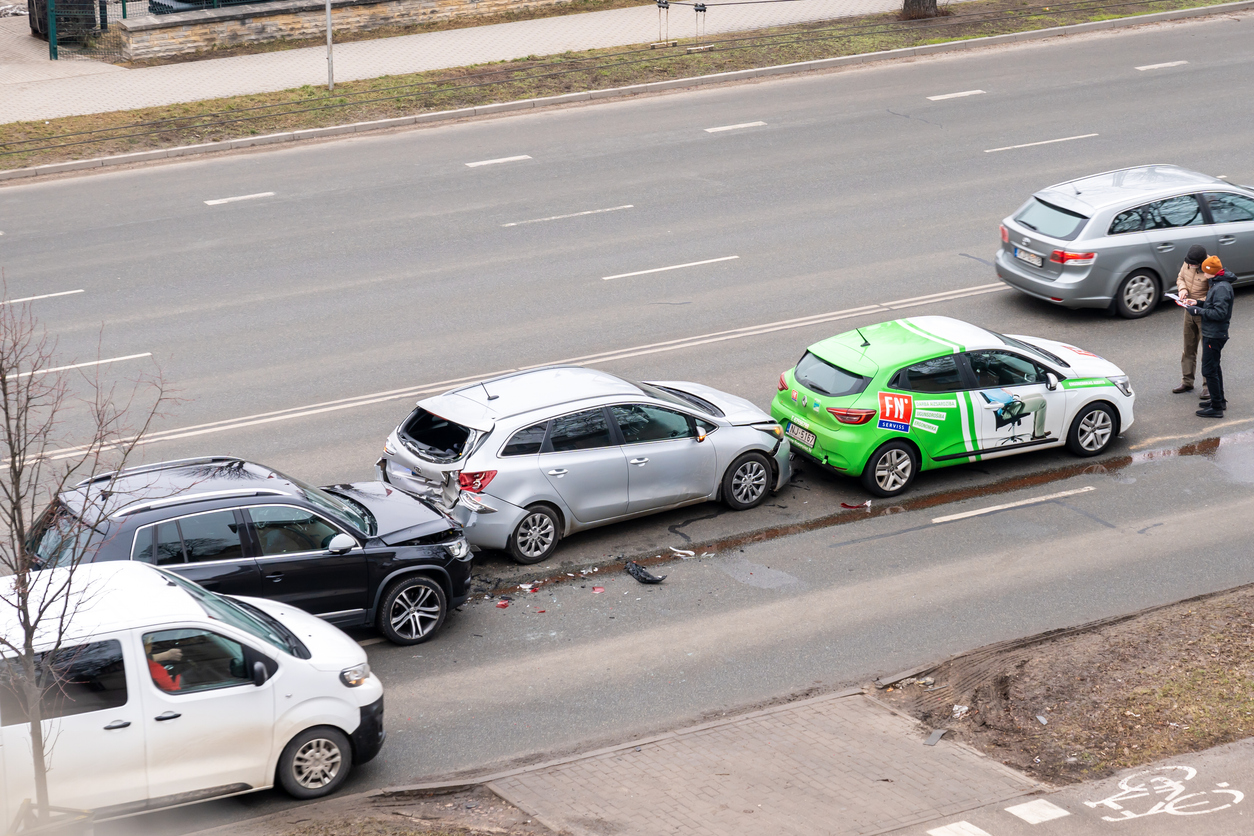
A chain reaction crash, sometimes called a multi-car accident, happens when one collision sets off a series of impacts involving multiple vehicles. These crashes are especially common in:
- Heavy traffic
- Highway pileups
- Stop-and-go conditions
- Poor weather
- Situations where drivers are following too closely
For example, one driver may fail to stop in time and rear-end the car in front of them. That impact may push the second vehicle into a third, and the third into a fourth. In just moments, what began as one mistake can turn into a much larger accident scene.
Why Fault Is More Complicated in Multi-Car Accidents
In a two-car crash, the question of fault is often more straightforward. In a chain reaction accident, there may be several impacts, several injured people, and several drivers arguing that someone else caused the crash.
These cases are more complicated because:
- More than one driver may have contributed
- Drivers often have different accounts of what happened
- Injuries may result from multiple impacts
- Insurance companies may point fingers at each other
- It can be difficult to determine which driver’s actions started the chain
That is why these cases often require a more detailed investigation than a standard accident claim.
Who May Be Liable in a Chain Reaction Crash?
Liability depends on the specific facts of the crash, but there are several common possibilities.
The Driver Who Started the Chain
In many cases, the driver who caused the initial impact may be primarily responsible. This often happens when a driver is:
- Following too closely
- Distracted
- Speeding
- Not paying attention to traffic conditions
For example, if the rear-most driver fails to stop and strikes the vehicle ahead, triggering a series of collisions, that driver may bear much of the responsibility.
Drivers Who Also Contributed
Sometimes more than one driver played a role. A driver may contribute to a multi-car crash by:
- Following too closely behind another vehicle
- Making an unsafe lane change
- Failing to brake appropriately
- Driving too fast for conditions
In these situations, liability may be divided among multiple drivers.
Other Potentially Liable Parties
In some cases, responsibility may extend beyond the drivers themselves. Other potentially responsible parties may include:
- A company if a commercial driver caused the crash while working
- An employer if the at-fault driver was acting within the scope of employment
- A vehicle manufacturer if brake failure or another defect contributed
- A government entity if dangerous road conditions played a role
At Reid Law Group, we look beyond the obvious to identify every possible source of recovery.
How Fault Is Investigated
Because multi-car accidents are so complex, evidence is critical. Determining fault often involves reviewing:
- Police reports
- Statements from drivers and witnesses
- Photos and videos from the scene
- Dash cam footage
- Traffic camera footage
- Vehicle damage patterns
- Skid marks and roadway evidence
- Event data from vehicles, when available
- Accident reconstruction analysis
The location of the damage on each vehicle can often help show the order of impacts. In more serious cases, accident reconstruction experts may be used to piece together how the crash unfolded.
How Georgia Shared Fault Rules Affect These Cases
Georgia follows a comparative negligence rule. This means that more than one person can share fault for an accident.
If an injured person is found to be less than 50% at fault, they may still recover compensation. However, their recovery may be reduced by their percentage of responsibility.
For example, if someone is found to be 20% at fault, their compensation may be reduced by 20%.
In multi-car accidents, insurance companies often use this rule to try to shift blame and reduce what they have to pay. That makes it especially important to have someone protecting your side of the story.
Common Insurance Issues in Multi-Car Accident Claims
Multi-car accidents often lead to multiple insurance claims, and that usually means multiple insurance companies trying to protect their own interests.
Common issues include:
- Delays while insurers investigate
- Disputes over who caused which impact
- Arguments over whether injuries came from one collision or another
- Pressure to give recorded statements early
- Efforts to place partial blame on the injured person
These cases can quickly become frustrating, especially for someone trying to heal while also managing calls from several adjusters.
What You Should Do After a Multi-Car Accident
If you are involved in a chain reaction crash, the steps you take afterward can make a major difference.
- Call 911: Always report the crash and request law enforcement.
- Get Medical Care: Even if you feel okay at first, symptoms can appear later.
- Document the Scene: If possible, take photos of:
- All vehicles involved
- License plates
- Road conditions
- Skid marks
- Debris
- Traffic signs or signals
- Get Information From Everyone Involved: Collect names, contact information, and insurance details from all drivers.
- Be Careful What You Say: Do not guess about fault or make statements that could be misunderstood later.
- Speak With an Attorney Early: The earlier an attorney can step in, the better chance there is to preserve evidence and protect your claim.
Why Legal Representation Matters
Chain reaction crashes are rarely simple. At Reid Law Group, we help clients by:
- Investigating how the accident actually happened
- Preserving important evidence
- Communicating with multiple insurers
- Identifying all liable parties
- Protecting clients from unfair blame
- Building a strong claim supported by facts
When several parties are involved, having the right legal team can make the difference between confusion and clarity.
Chain reaction crashes can leave injured people dealing with more than physical pain. They also create confusion about who is responsible and how compensation should be pursued.
The truth is that liability in a multi-car accident depends on the details, and those details matter. If you’ve been injured in a chain reaction crash, Reid Law Group is here to help. Our team can investigate the accident, explain your options, and fight to protect your rights every step of the way.