
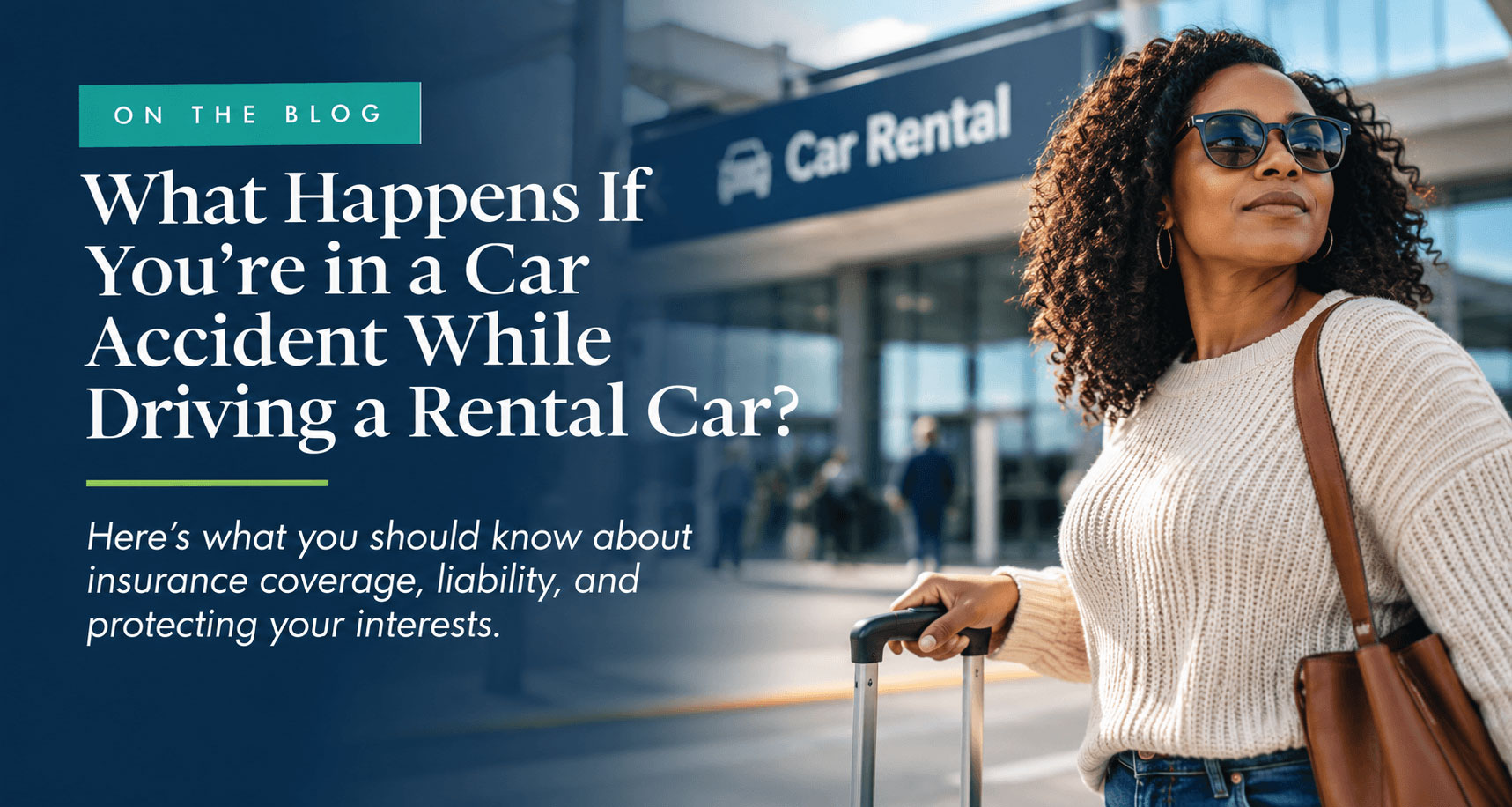
Planning to rent a car for holiday travel? Here’s what you should know about accidents, insurance coverage, and protecting your interests.
With Thanksgiving approaching, many Georgians are preparing to hit the road. Whether you’re flying to visit family and picking up a rental car at the airport or renting a larger vehicle for a holiday road trip, rental cars can make traveling more convenient.
But what happens if you’re involved in an accident while driving one?
Unlike an accident involving your personal vehicle, a rental car accident can introduce additional questions about insurance coverage, rental agreements, and financial responsibility. Understanding how these factors may affect your situation can help you make informed decisions if an unexpected accident disrupts your plans.
- Does Your Personal Auto Insurance Cover a Rental Car?
One of the first questions drivers have after a rental car accident is whether their personal auto insurance applies.
In some situations, your existing auto insurance policy may extend coverage to a rental vehicle. However, this depends on the specific terms of your policy, the type of coverage you carry, and the circumstances surrounding the accident.
For example, liability coverage may apply differently from collision or comprehensive coverage. There may also be limitations or exclusions related to the rental vehicle, how it was being used, or where the accident occurred.
Before renting a vehicle, it’s worth contacting your insurance provider to understand what coverage, if any, extends to rental cars.
The important thing to remember: Never assume your personal insurance automatically provides the same protection for every rental vehicle or situation.
- What About Insurance Offered by the Rental Car Company?
When picking up a rental vehicle, you’ve probably been asked whether you want to purchase additional protection.
Rental companies commonly offer several types of optional coverage or protection products, which may include:
- Collision Damage Waiver (CDW) or Loss Damage Waiver (LDW): Depending on the agreement, these products may waive or limit your financial responsibility for certain damage to or loss of the rental vehicle. They are not necessarily insurance policies.
- Supplemental Liability Protection: May provide additional liability coverage for certain injuries or property damage caused to others.
- Personal Accident Insurance: May provide limited benefits for certain medical expenses or accidental death.
- Personal Effects Coverage: May provide protection for certain personal belongings damaged or stolen during the rental period.
Each option has its own terms, limitations, and exclusions.
Some credit cards also offer rental vehicle protection when specific requirements are met, such as using the card to pay for the rental. However, credit card benefits frequently focus on damage to the rental vehicle and may not provide liability coverage or compensation for injuries.
Understanding these differences before your trip can help you avoid confusion if an accident occurs.
- Who Is Responsible If Another Driver Causes the Accident?
If another driver causes an accident involving your rental car, you may have options for pursuing compensation for injuries and other covered losses.
As with accidents involving personally owned vehicles, responsibility generally depends on the facts of the collision and the law that applies.
Relevant factors may include:
- Whether another driver failed to follow traffic laws or drove negligently
- Available evidence, including photographs, witness statements, and accident reports
- The nature and extent of any injuries
- The insurance coverage available to the parties involved
The fact that you were driving a rental vehicle does not automatically prevent you from pursuing a personal injury claim.
However, the rental agreement, insurance policies, and applicable state law may affect how different aspects of the claim are handled.
- What Should You Do Immediately After a Rental Car Accident?
An accident can be overwhelming, especially when you’re traveling away from home. Taking a few important steps may help protect your safety and preserve information that could be relevant later.
Check for injuries and seek medical attention.
Your health and safety should come first. Call emergency services when appropriate, and seek medical evaluation if you are injured or experiencing symptoms. Some injuries may not be immediately apparent.
Report the accident to law enforcement.
Follow the reporting requirements that apply where the collision occurred. If officers respond, ask how to obtain a copy of the accident report.
Document the scene.
If it’s safe to do so, take photographs of the vehicles, visible damage, roadway conditions, traffic signals, and other relevant details. Exchange contact and insurance information with the other drivers involved.
Notify the rental car company.
Rental agreements generally include instructions for reporting accidents or damage. Contact the company promptly and follow its reporting procedures.
Contact your insurance provider.
Notify your insurer and ask about applicable coverage and any required steps. If you purchased protection through the rental company or have credit card rental benefits, review the relevant terms and reporting requirements as well.
Keep your documentation.
Save your rental agreement, photographs, accident report information, medical records, receipts, and communications related to the accident.
These materials may become important if questions arise about coverage, damages, or responsibility.
- What Happens If the Accident Occurs Outside Georgia?
Holiday travel often takes drivers across state lines, which can introduce additional legal considerations.
If you’re a Georgia resident injured in a rental car accident in another state, the location of the collision may affect which laws apply, where a claim or lawsuit may be brought, and which attorneys can represent you.
Different states may have different rules regarding liability, insurance, filing deadlines, and the process for pursuing compensation.
Because these issues can be complicated, it’s important not to assume that Georgia law automatically governs an accident simply because you live in Georgia or rented the vehicle here.
An attorney can help evaluate the circumstances and identify which legal questions need to be addressed.
- When Should You Contact a Personal Injury Attorney?
Not every rental car accident requires legal representation. However, speaking with an attorney may be helpful when an accident results in injuries, disputed liability, significant losses, or questions about available insurance coverage.
A personal injury attorney may be able to help you:
- Understand the potential legal options available under the circumstances
- Evaluate evidence related to the accident
- Identify potentially responsible parties
- Review relevant insurance and liability questions
- Understand how applicable laws and deadlines may affect a claim
Rental car accidents can involve multiple insurance policies and contractual obligations. Having a clear understanding of those issues can help you make informed decisions about what comes next.
Traveling This Holiday Season? Preparation Matters.
Renting a vehicle can be a convenient way to travel, whether you’re heading home for Thanksgiving, taking a family vacation, or traveling for business.
Before getting behind the wheel, take a few minutes to review your insurance coverage, understand your rental agreement, and familiarize yourself with the company’s accident reporting procedures.
No one plans to be involved in an accident while traveling, but knowing what steps to take can make an unexpected situation easier to navigate.
At Reid Law Group, P.C., we understand that an accident can leave you with questions about your injuries, insurance coverage, and legal options. Our team is committed to providing compassionate guidance and helping injured individuals understand their circumstances.
If you’ve been injured in a car accident and have questions about your options, contact our office to discuss your situation.