
After an accident, most people are focused on immediate concerns: getting medical care, missing work, repairing a vehicle, and figuring out how to move forward. A possible trial may be the last thing on their minds.
The truth is that many personal injury cases resolve without ever entering a courtroom. However, that does not mean trial preparation should wait until a lawsuit is filed. The decisions made early in a case can affect the evidence available, the strength of the claim, and the options an injured person may have later.
At Reid Law Group, we believe preparation starts on day one. Being trial ready does not mean forcing every case into court. It means preparing each case with the understanding that, if a fair resolution cannot be reached, the legal team must be ready to take the next step.
What Does “Trial Ready” Actually Mean?
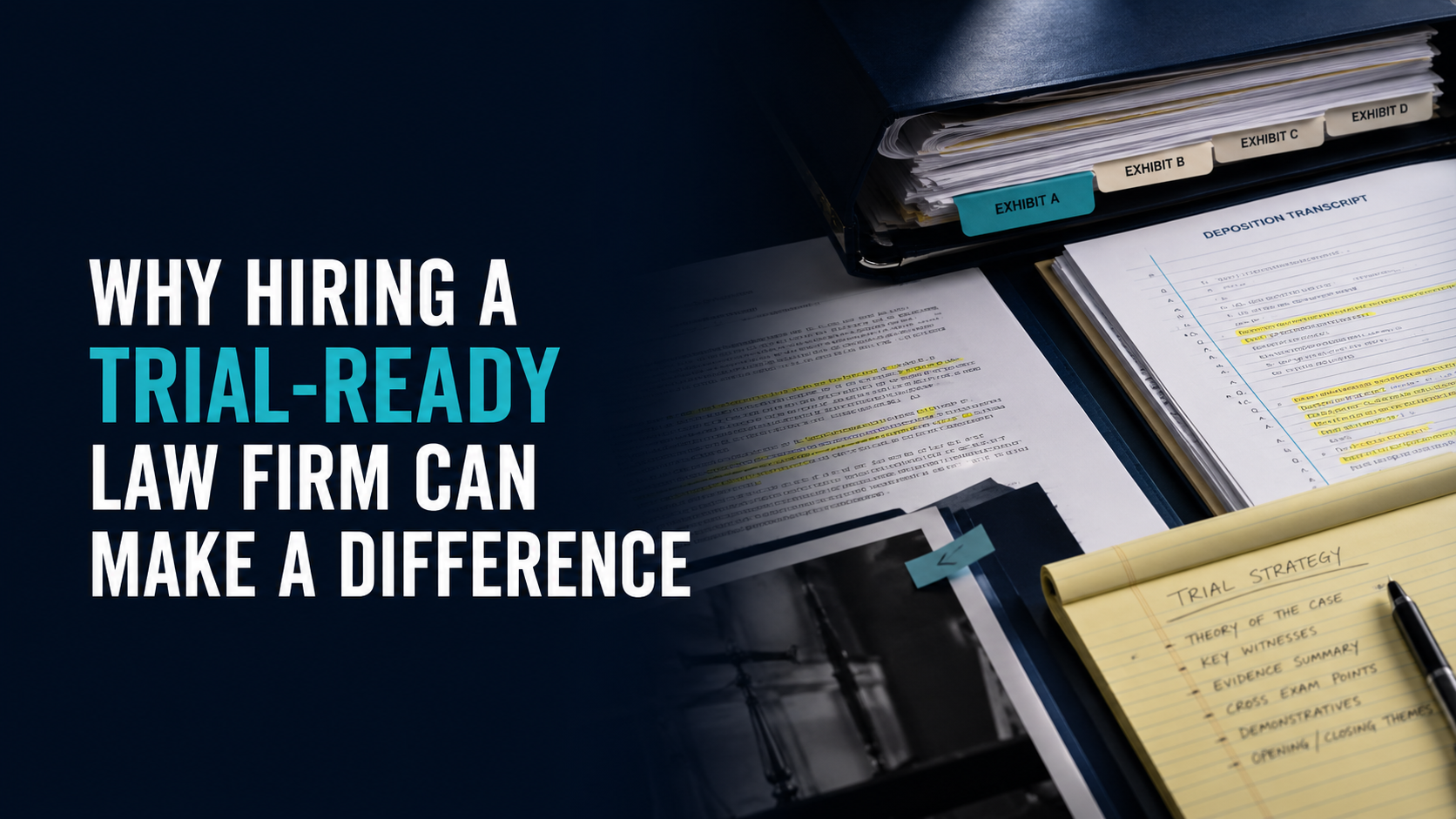
A trial-ready law firm approaches a personal injury case as though the facts may eventually need to be presented to a judge or jury.
That approach includes investigating how the injury occurred, identifying who may be responsible, preserving relevant evidence, documenting the client’s injuries and losses, and recognizing potential challenges before they become larger problems.
It also means looking beyond the strongest parts of a claim. A prepared legal team considers what the insurance company or opposing side may dispute, including:
- How the accident occurred
- Whether responsibility is being contested
- Whether the injuries were caused by the accident
- Gaps or delays in medical treatment
- Preexisting medical conditions
- The extent of the client’s financial and personal losses
Understanding these issues early gives the legal team time to investigate them and determine how they may affect the case.
Trial readiness is not about being aggressive for the sake of appearing aggressive. It is about being thorough, strategic, and prepared to protect the client’s options.
Strong Cases Begin with Early Investigation
Some of the most important evidence in a personal injury case may only be available for a limited time.
Surveillance footage can be erased or recorded over. Vehicles may be repaired or sold. Dangerous property conditions can change. Witnesses may become difficult to locate, and memories may become less precise.
Depending on the circumstances, useful evidence may include:
- Photographs or videos from the scene
- Vehicle damage
- Police or incident reports
- Surveillance, dashcam, or traffic-camera footage
- Witness statements and contact information
- Medical records and bills
- Employment and wage documentation
- Electronic information from a commercial vehicle
- Relevant emails, text messages, or other communications
Once evidence disappears, it may be impossible to recreate. That is why Reid Law Group’s trial-ready approach begins with understanding what happened, identifying what evidence may exist, and taking appropriate steps to build the case from the beginning.
The Full Effect of an Injury Matters
A personal injury claim is not limited to the first medical bill or the visible damage from an accident. Injuries can affect a person’s work, independence, family responsibilities, and everyday quality of life.
A trial-ready firm looks at both the immediate and longer-term effects of the injury. Depending on the case, that may include medical treatment, future care, rehabilitation, time missed from work, reduced earning ability, physical limitations, out-of-pocket expenses, and changes to the client’s normal routine.
It is not enough to simply say that an injury changed someone’s life. A well-prepared case should be able to explain what changed and support that explanation with medical records, financial documents, testimony, photographs, or qualified expert opinions when appropriate.
At Reid Law Group, serious case preparation and compassionate client care go hand in hand. We understand that behind every file is a person whose life has been disrupted. Taking the time to understand the client’s experience helps the legal team present a more complete and accurate picture of what was lost.
Trial Preparation Can Strengthen Settlement Discussions
Preparing for trial and working toward a settlement are not opposing strategies. In fact, thorough preparation can support more meaningful settlement discussions.
An insurance company may make an early offer before the full extent of the injuries is known. Once a settlement is accepted and the appropriate release is signed, the injured person generally cannot return later to request additional compensation for that claim. This makes it important to understand the available evidence, the extent of the losses, and the possible risks before deciding.
A well-supported claim may include medical records, bills, wage information, photographs, expert opinions, and other documentation explaining both responsibility and damages.
No law firm can guarantee that preparation will produce a particular offer or outcome. However, when the opposing side understands that a claim has been thoroughly investigated and can be supported if litigation becomes necessary, the discussion may be more informed and substantive.
If Litigation Becomes Necessary, the Firm Is Prepared to Move Forward
When negotiations do not result in an appropriate resolution, filing a lawsuit may become necessary. A firm that has prepared the case from the beginning is not starting over when that happens.
The legal team may already understand the key evidence, potential witnesses, medical history, claimed losses, and issues the defense is likely to raise. This foundation can help the case move more effectively into discovery, depositions, mediation, expert review, and possible trial.
Timing is also important. In Georgia, personal injury actions are generally subject to a two-year statute of limitations, although exceptions and shorter notice requirements may apply depending on the circumstances and the parties involved. An injured person should not assume the general deadline applies to every case.
Being trial ready also means preparing the client. At Reid Law Group, we believe clients should understand what is happening, what may be expected of them, and how major decisions could affect their case. Clear communication helps clients participate in the process and make informed choices at every stage.
Preparation Protects Your Options
No attorney can predict at the beginning exactly how a personal injury case will end. Some cases resolve through negotiation or mediation, while others require litigation or trial.
Because that outcome is not always known from the start, early preparation matters.
At Reid Law Group, we prepare with purpose from day one. We work to understand the circumstances, preserve important evidence, document the effects of the injury, and build a case that can move forward if a fair resolution cannot be reached.
That does not mean every case will go to trial. It means our clients are represented by a team committed to being prepared for whatever direction the case may take.
If you were injured because of someone else’s actions and have questions about your legal options, contact Reid Law Group at (678) 342-9333 or visit reidlawgroup.net to schedule a consultation.
This article is provided for general informational purposes only and does not constitute legal advice. Every case is different, and prior results do not guarantee a similar outcome.